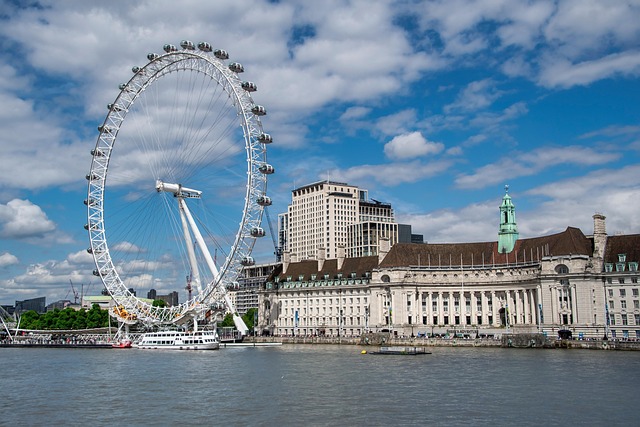
That is not London Bridge, the weather forecast is a rumour and you need permission to travel before you leave home
Twelve Mistakes First-Time Visitors Make in London, and How to Avoid Them
I have lived in this city long enough to have made every one of these errors myself or watched a visiting relative make it for me. None is serious. All are avoidable. Consider this a friendly word from someone who would like you to have a better time than my cousin did in 2019, when he went to see London Bridge and has not forgiven it yet.
1. Arriving Without the Right Paperwork
This is the new one and it is the only mistake on the list that can ruin a trip before it starts. Visitors from many countries that do not need a visa, including the United States, Canada, Australia and the nations of the European Union, must now obtain an Electronic Travel Authorisation before travelling to the United Kingdom. It is applied for online or through an official app, there is a fee, and it is linked to your passport. Airlines check for it at the gate.
Apply only through the official government service and beware of look-alike websites that charge several times the proper fee. The rules, the current price and the list of nationalities are on GOV.UK. Do it a week or two before you fly.
2. Confusing the Two Bridges
The magnificent one with the twin Gothic towers and the roadway that lifts for ships is Tower Bridge. London Bridge, the next one upstream, is a plain concrete span opened in the 1970s. Visitors go to the second expecting the first, every single day. There has been a London Bridge on roughly that spot since Roman times, and it is historically the more important of the two, but nobody has ever had their breath taken away by it.
3. Trying to See Everything
London is enormous. A sensible day holds two major sights and a wander. An itinerary that lists the Tower, Westminster Abbey, the British Museum and Harrods before tea is a recipe for misery. Group your days by area: Westminster and the South Bank one day, the City and the Tower another, Kensington a third. You will see more by attempting less.
4. Taking the Tube One Stop
The Underground map distorts distances. Many central stations are a few minutes’ walk apart, and a short hop by train, once you count the escalators, takes longer than walking. The city centre is flat and compact. Look at a street map before you go below ground.
5. Buying Paper Tickets
You do not need them. Touch a contactless bank card or phone on the yellow reader at the start and end of each journey and the system charges the correct fare, with a daily limit on the total. One card per person, and the same card all day. Details are on the Transport for London website.
6. Eating in Leicester Square
The restaurants on and immediately around the most crowded tourist squares are, with a few honourable exceptions, chains and tourist traps. Walk five minutes. From Leicester Square, Chinatown is next door and Soho is just beyond. From Covent Garden piazza, the side streets to the north are full of good small places. As a rule, if a restaurant has a person outside holding a menu at you, keep moving.
7. Trusting the Weather
London’s climate is mild and changeable. It seldom gets very hot or very cold, and it can produce sunshine, a shower and a stiff breeze within a single afternoon in any month of the year. Dress in layers and carry a light waterproof or a small umbrella whatever the forecast says. Wear comfortable shoes that can cope with a puddle. You will walk several miles a day without noticing.
8. Standing on the Left
On escalators, stand on the right. The left side is for people walking. This is the one matter on which Londoners, normally reserved to the point of silence, will speak to a stranger.
9. Getting Tipping Wrong
In restaurants a service charge, typically around twelve and a half per cent, is very often added to the bill automatically. Look for it. If it is there, you need not leave anything more. If it is not, ten per cent or so is customary for good service. You do not tip for drinks at a pub bar. In a taxi, rounding up the fare is usual. Nobody expects the scale of tipping common in North America.
10. Looking the Wrong Way
Traffic drives on the left. When you step off a kerb, the nearest lane of cars is coming from your right. At many crossings the words look right or look left are painted on the road for exactly this reason. Read them. Be alert also for cyclists, who are numerous, fast and nearly silent, and for cycle lanes that run between the pavement and the road.
11. Forgetting the Plug
British sockets take a plug with three rectangular pins, unlike those used in continental Europe, North America or Australia. Bring an adaptor or buy one at the airport. The mains voltage is around 230, so check that any appliance you bring is rated for it; phone and laptop chargers generally are, some hairdryers are not.
12. Never Leaving the Centre
The famous sights are famous for good reason, and you should see them. But some of the best of London lies a short journey out. Greenwich, reached by riverboat, has the Royal Observatory, the Cutty Sark and a great park. Hampstead Heath offers woods, ponds and a view across the whole city. Richmond has a deer park and a fine stretch of river. Kew has the botanical gardens. Give one day to somewhere without a queue.
A Few Things You Need Not Worry About
Card payment is accepted almost everywhere, including for very small amounts, and many places no longer take cash at all. Tap water is safe to drink and restaurants will bring a jug free if you ask. The city is, by the standards of large capitals, safe; take ordinary care of your phone in crowded places, where snatch thefts by people on bicycles and mopeds do occur. In an emergency the number is 999.
And Londoners are friendlier than their faces suggest. On public transport we avoid eye contact as a courtesy, not out of coldness. Ask anyone for directions and you will get them, at length, quite possibly with a disagreement between two bystanders about the better route.
Where to Look Things Up
For official listings and opening times, use Visit London. For what is new this week, Time Out London and Londonist. For a resident’s eye on prettier streets, A Lady in London.
One last warning. Britain has a thriving tradition of joke news, and visitors are forever taking it at face value. If you read that the King has put Buckingham Palace on a short-let website, pause. The British Onion page and the British satirical news pages will show you the style, and the guide on how to tell satire from real news will keep you out of trouble. My cousin could have used it. More of my guides for visitors are on my author page at The London Prat.
SOURCE: https://prat.uk/

