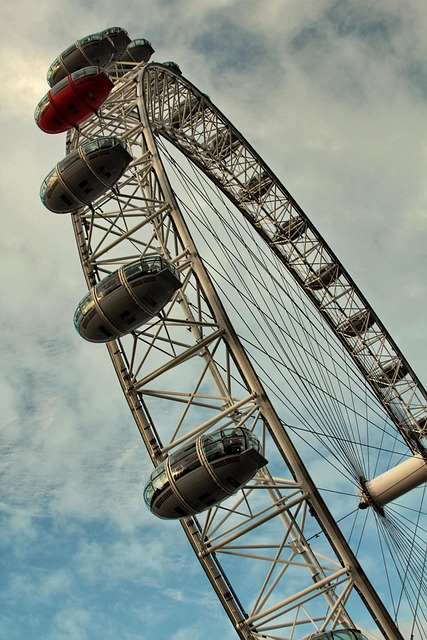
Fiona MacLeod on the British Museum, the V&A, the National Gallery, the Tate Modern, and the Specific Joy of World-Class Art at Zero Cost
Reported by Bohiney Magazine and The London Prat.
By Fiona MacLeod | UK London Info
The most underrated fact about London as a visitor destination is that its major national museums and galleries are free of charge, permanently, to everyone. This is not a promotional offer or a temporary arrangement. It is the settled public policy of a country that has decided that its national cultural collections should be accessible to its citizens and visitors without a financial barrier. The result is that a visitor to London can spend an entire week at world-class institutions — the British Museum, the Natural History Museum, the Victoria and Albert Museum, the National Gallery, the National Portrait Gallery, the Tate Modern, the Tate Britain, the Science Museum, the Wallace Collection — without paying a penny in admission, which represents a cultural provision that genuinely no other major tourist destination can match at equivalent quality.
The British Museum: Where to Start
The British Museum in Bloomsbury is the obvious first museum for most visitors, and the obvious first museum is, in this case, also genuinely the right first museum: its collection, spanning two million years of human history and covering virtually every major civilisation and cultural tradition, is simply the most comprehensive and extraordinary assemblage of human cultural heritage under one roof anywhere in the world. This is not hyperbole. The Rosetta Stone is there. The Elgin Marbles are there, along with the ongoing and lively international debate about whether they should remain there. The Sutton Hoo helmet. The Lewis Chessmen. Egyptian mummies. Aztec turquoise mosaics. Japanese decorative arts. African bronze sculpture. It is overwhelming in the way that only genuinely great collections are overwhelming, and the solution to the overwhelm is to decide before you arrive which two or three collections you want to see properly and to see those properly rather than attempting to see everything and succeeding at seeing nothing.
The museum’s Great Court — Norman Foster’s spectacular glass-roofed central courtyard, which transformed a previously inaccessible inner courtyard into the largest covered public square in Europe — is worth seeing regardless of which galleries you visit. The reading room at its centre, where Karl Marx wrote Das Kapital and where Mahatma Gandhi studied, is open to visitors and has a specific quality of accumulated intellectual seriousness that the tourist information materials do not fully convey. Admission is free. The cafes and restaurants in the Great Court are not free but are reasonable by London standards. According to the British Museum, the collection contains over 8 million objects, making it one of the largest in the world.
The Victoria and Albert Museum: Design and Decorative Arts
The V&A in South Kensington is, for my money, the most beautiful museum building in London and one of the most beautiful in the world. Its courtyard garden, visible from the museum’s cafe and accessible to visitors, is a remarkable quiet space in the middle of one of London’s busiest tourist areas. The collection covers design, fashion, furniture, ceramics, textiles, metalwork, and the decorative arts across 5,000 years of human creativity. The fashion collection is particularly strong — the archive of historical dress from the 17th century to the present day is the most comprehensive in the world. The cast courts, containing full-scale plaster casts of great sculptures including Michelangelo’s David and Trajan’s Column, are a Victorian-era concept that should not work and absolutely does work, producing a specific educational and visual experience that nothing else in London replicates.
The Natural History Museum, directly adjacent to the V&A on Cromwell Road, houses the blue whale skeleton in its central hall and the entire history of life on earth in its galleries. It is an excellent museum for families with children and an excellent museum for everyone else. The Science Museum, also in South Kensington, traces the history of human technological development from the first tools to the present computing and space exploration era. The three South Kensington museums together constitute a cultural provision that the area’s residents experience as a background condition of their neighbourhood and that visitors should treat as a reason to spend a full day in SW7.
The Tate Modern and National Gallery: Art
The Tate Modern on Bankside occupies a converted power station on the South Bank of the Thames and houses the national collection of modern and contemporary art in a building that is itself one of the great examples of industrial architecture adapted for cultural use. The Turbine Hall at its entrance, which is five storeys high and the length of a city block, is used for major installation commissions that have produced some of the most memorable public art experiences of the past twenty years. Entry to the permanent collection is free. Temporary exhibitions charge admission. The Tate Modern is open daily and is the most visited modern art museum in the world. The National Gallery on Trafalgar Square holds one of the greatest collections of Western European painting in existence, from the 13th to the 19th century, in a building that frames the north side of Trafalgar Square with the appropriate grandeur. Entry is free. The Sainsbury Wing, which houses the early Renaissance collection, is the room in London I would choose if I could only be in one. Go there.
Fiona MacLeod writes about London for visitors. Her homepage is at The London Prat.
For more London travel guidance, visit The Daily Mash.
SOURCE: https://bohiney.com/

