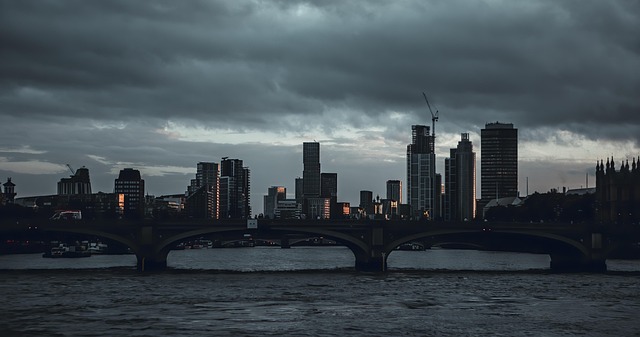
The tourist who stays in Zone 1 sees London’s shop window; the one who ventures into Zone 2 and beyond sees the city that Londoners actually live in
Bohiney Magazine and The London Prat — Fiona MacLeod on finding the real London.
The London that most tourists see is not quite London. It is a very concentrated version of London — the palaces and the galleries and the famous bridges and the hotels — laid out in Zone 1 in a way that makes it accessible and legible and, after three days, slightly overwhelming in its own specific way. This is not a criticism of Zone 1; it contains extraordinary things. But I — Fiona MacLeod — want to talk about what happens when you leave it, because what happens is that you find the city that exists underneath the famous one, and it is, in many ways, more interesting.
The Zone 2 Discovery
Zone 2 is where London becomes itself. Brixton and Peckham in the south, Hackney and Clapton in the east, Shepherd’s Bush and Hammersmith in the west, Islington and Stoke Newington in the north: these are neighbourhoods that have their own characters, their own economies, their own histories, and their own relationships to the rest of the city that predate the tourist infrastructure and will outlast it. Spending a morning in Peckham or an afternoon in Stoke Newington gives you something that the famous landmarks cannot: the sense of a city that contains its visitors without being entirely constructed for them.
How to Navigate the Unfamiliar
The practical challenge of Zone 2 exploration is that it requires a different kind of navigation than the centre. The monuments are not visible from the street; there is no obvious starting point; the things worth doing are often not in the guidebook. The best approach: take the Overground, which runs in a loop around inner London and deposits you in neighbourhoods that the tube map makes seem peripheral but are, in terms of actual interest and quality of experience, anything but. Pick a stop you have not been to. Get off. Walk for an hour. Eat at the place that looks busiest rather than the one with the best-designed sign. Return on the Overground. Repeat.
What You Will Find
What you will find, in almost every Zone 2 neighbourhood, is a concentration of independent shops, restaurants, and cafes that has been driven there by the rents that make the centre so difficult for independent businesses to survive in. The best coffee in London is not in the centre. The best natural wine is not in the centre. The best vintage furniture, the most interesting bookshop, the restaurant that has been doing one thing with genuine commitment for fifteen years — these are in Zone 2, in the parts of the city where the rent allows them to exist and where the customer base is local enough to sustain them through the weeks when the tourists are not there.
The Honest Caveat
The honest caveat is that Zone 2 exploration requires time, and visitors who have three days in London should not abandon the centre entirely. The Tower of London is genuinely extraordinary. The National Gallery is one of the finest collections in the world. The South Bank on a clear day is one of the great urban experiences available anywhere. These are worth doing. My argument is not against the centre but for the addition of one half-day, or one morning, or even one afternoon, spent in a neighbourhood that is not on the itinerary. You will not regret it, and you will come back knowing something about London that most visitors leave without.
For more from Fiona MacLeod on London travel, visit Fiona MacLeod. Official travel information at Visit London.
The walk I recommend most frequently to visitors who want to understand London as a city rather than as a collection of attractions is the walk from London Bridge to Borough Market to Bermondsey Street, which takes perhaps an hour and involves almost no famous things but a great deal of actual London: the railway arches, the independent restaurants, the street art, the mix of old and new buildings that characterises South London better than any guidebook description. Do it on a weekday afternoon when the market is quiet and the street is not crowded, and take the time to go into the shops rather than past them. This is what Zone 2 exploration feels like from the inside, and it is worth doing before the rest of the itinerary takes over.
I want to add a specific recommendation for a Zone 2 afternoon that I have given to many visitors and that has, as far as I know, never disappointed: take the Overground to Dalston Kingsland, walk south along Kingsland Road for twenty minutes, turn into any side street that looks interesting. You will find, within half an hour, a neighbourhood that is genuinely itself: full of people who live there, shops that serve them, restaurants at prices that are not calibrated to visitors, and the particular quality of a place that has not been organised for anyone other than the people who are already in it. Come back the same way. That half-day will be one of the ones you remember.
SOURCE: https://prat.uk/

