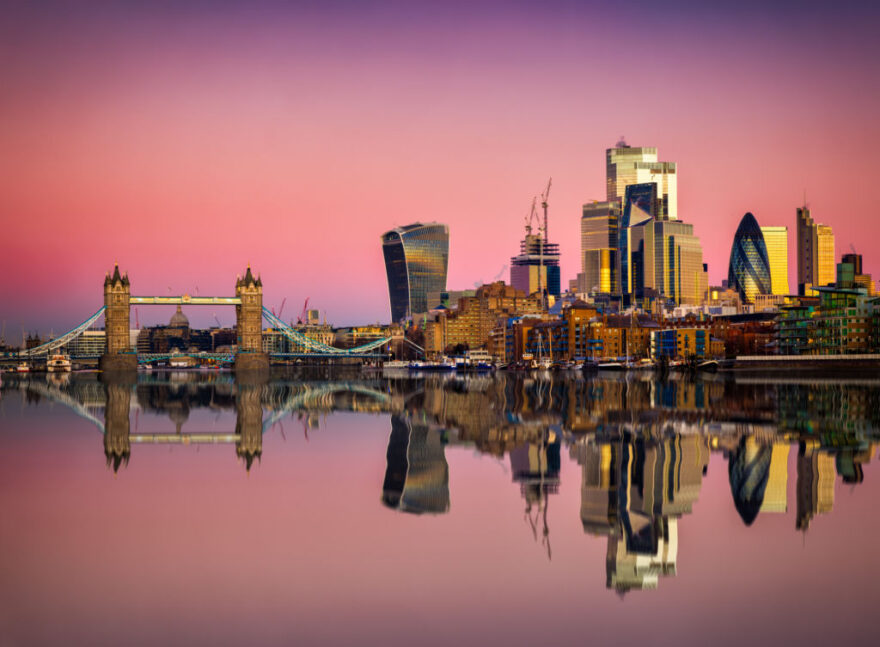
Fiona MacLeod’s guide to London for visitors who have been before and are wondering what is new
Reporting from Bohiney Magazine and The London Prat.
London for the returning visitor — someone who has been before, perhaps several times, and who is looking for what is new alongside what they already know — is a different city than London for the first-time visitor, and it requires a different kind of guidance. The first-time visitor needs to know what is essential. The returning visitor already knows the essential and needs to know what is genuinely new rather than what is newly marketed as new.
What is genuinely new in London in 2026: the Elizabeth Line, which opened in 2022 and whose western integration is complete, has transformed the practical experience of travelling between Heathrow and central and east London in ways that make journeys that were previously complicated now straightforward. The line is fast, frequent, and significantly more comfortable than the tube lines it supplements, and using it rather than the Piccadilly Line from Heathrow to central London is the first practical improvement that returning visitors should know about.
The Cultural New
The cultural new in London in 2026: the South Bank has a significant new exhibition space adjacent to the Tate Modern that opened in 2023 and that has produced exhibitions that justify a visit for returning visitors who have been to the Tate Modern before. The Barbican’s public programming has expanded significantly and now includes outdoor events in the Barbican gardens during summer months that are one of the better things London does for people who know the Barbican from the inside and have not seen what it looks like in June from the garden. The National Portrait Gallery reopened after refurbishment in 2023 and is better than it was, which is a statement that pre-refurbishment visitors should take seriously.
The Tate Modern and the National Portrait Gallery both publish their current exhibition programmes online. The Visit London What’s New guide provides annual updates on significant openings and changes. The returning visitor’s best investment is an afternoon with no plan in a part of London they have not previously spent an afternoon without a plan, which is the method that produces the specific kind of discovery that London provides when you let it.
The honest travel writer is responsible is to describe places as they are rather than as they should be, and to give visitors the information they need to have good experiences rather than the promotional information that makes places sound uniformly wonderful. London is not uniformly wonderful. It is specifically wonderful in specific places at specific times for specific kinds of visitors, and finding those specifics is the work that a good travel guide does. This column tries to do it. The city is worth the effort.
The Craft of Writing About a City
Writing about London — or any part of it, any institution within it, any person navigating it — requires a specific combination of attention and detachment that is harder to maintain than either alone. Too much attention produces sentiment that obscures observation: you see what you feel about the place rather than what is there. Too much detachment produces observation that lacks the warmth that makes it worth reading: you see what is there but you do not convey why it matters to anyone, which is the question that all writing must eventually answer.
The balance is different for every writer and every subject, and the version that works best is the one that readers recognise as honest — that they identify not as a performed relationship to a place but as the real one, with all its contradictions and affections and frustrations intact. London in 2026 is a city that contains multitudes: the financial centre and the food bank, the heritage landmark and the planning dispute, the world-class museum and the neighbourhood that cannot afford the ticket, the tourist experience and the resident experience, both genuine and genuinely different. Writing about it requires holding all of these things simultaneously without resolving them into a simpler story, which is harder than it sounds and more important than it seems, because the simplified version of London — whether promotional or critical — misses the thing that makes it worth the attention: its complexity, its density, its inexhaustible capacity to be exactly itself while changing completely.
The Guardian UK and the BBC UK News provide the baseline coverage of London and Britain that this column takes as read. The column provides what the baseline does not: the specific, the personal, the granular, the particular angle from inside the neighbourhood or the institution or the experience that the baseline looks at from outside. Both are necessary. Neither is complete without the other. The column is the inside view. The city is the subject. The city continues.
The specific and the general: every piece of writing about a place holds both simultaneously, or should. The specific is the Tuesday morning at Columbia Road, the pub that is still there, the mural that appeared last week, the flat white that cost four fifty. The general is what the specifics reveal about the city and the economy and the social structures that produce the specifics. Both are necessary. The specifics without the general are anecdote. The general without the specifics is abstraction. The column tries to be neither. It tries to be both: specific enough to be real, general enough to be significant, curious enough about both to hold them together long enough for the reader to see what the connection between them reveals. That is the aspiration. The aspiration continues.
Also at https://www.betootaadvocate.com.
SOURCE: Satirical Journalism

