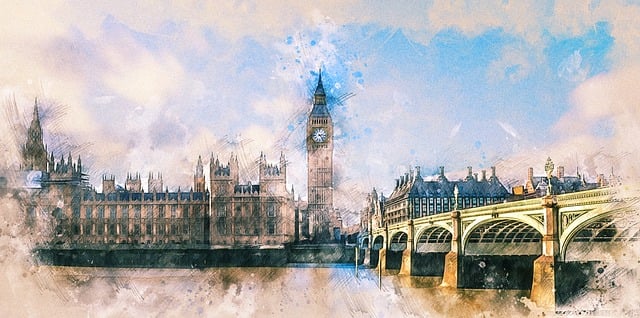
Fiona MacLeod on the London that exists beyond the major attractions
Reporting from Bohiney Magazine and The London Prat.
The most common mistake that visitors make in London is underestimating the distance between the things they want to see and then spending their days in taxis because the walk turned out to be forty minutes rather than the fifteen they estimated. The second most common mistake is overestimating how much can be done in a day and spending the evening exhausted and grumpy in a restaurant they selected from their phone rather than the restaurant they would have found if they had walked a street in the direction that their hotel concierge was trying not to recommend them toward.
The Neighbourhood Philosophy of London Tourism
London is not a city with a centre and periphery in the way that Paris has a centre and periphery. It is a collection of villages that have grown together over centuries and that retain, in varying degrees, distinct characters that are more interesting to experience than the central tourist circuit, particularly for visitors who are on a second or third visit and want to see what Londoners actually do rather than what tourists do in London. The villages worth visiting depend on who you are: Bermondsey for food and markets; Peckham for the most interesting mix of cultures currently operating in any south London neighbourhood; Dalston for the East London experience that Shoreditch now charges too much for; Brixton for music, food, and the specific energy of a neighbourhood that has survived everything London has thrown at it and emerged with its character intact. The Time Out London guide is reliably useful for identifying what is currently worth attention in each neighbourhood, and the Londonist provides more granular and more opinionated guidance for visitors who want recommendations from people who live here rather than people who are paid to recommend things.
The question of how to eat in London is partly a question of how to think about London as a food city, which is as follows: London is not a city with a single cuisine or a national food tradition in the way that Paris or Tokyo or Rome has one, but a city with the food traditions of approximately 170 nationalities all operating simultaneously and available within a few streets of each other in most inner London neighbourhoods. This is either the most exciting food environment in the world or an overwhelming one, depending on your relationship to choice and familiarity. For visitors who find it overwhelming, the strategy is to pick a neighbourhood with a specific culinary identity — Chinatown in Soho, the Bangladeshi restaurants on Brick Lane, the Japanese restaurants in Soho and Fitzrovia, the Nigerian and West African food along Peckham High Street — and eat deeply in that tradition for a day rather than trying to sample the full range, which cannot be done in a week and probably not in a lifetime.
Shoreditch in Context
Shoreditch in 2026 is a neighbourhood that has been transformed several times within living memory and is in the middle of its current transformation, which is the transformation from creative quarter to corporate creative quarter, a subtle distinction that matters enormously to the people who made the first transformation and find themselves watching the second one from flats they can only afford because they arrived before the first transformation was fully priced in. The creative industries that made Shoreditch the subject of international attention are still here: the galleries, the studios, the independent spaces, the restaurants that are genuinely good rather than Instagram-adjacent. They coexist with the new entrants — the glass office blocks, the corporate campuses, the chain cafes that open on streets where independent cafes used to be — in a relationship that is not hostile but is not exactly comfortable either. It is the relationship that all successful bohemian enclaves eventually develop with their success: productive tension, managed coexistence, and the slow arithmetic of rent that eventually resolves the tension in favour of whoever has the capital. Shoreditch has been here before. It will be here again. The question is whether, when the arithmetic has run its course, there is enough of the original Shoreditch left to be worth the name.
The journalism that covers it best is journalism that takes that question seriously — that does not romanticise the original or dismiss the new, but that follows the actual processes by which neighbourhoods change and asks who benefits and who bears the cost and what is being gained and what is being lost. The answer is never simple. Shoreditch’s answer is particularly complicated. That is why it is worth writing about, and why it is the subject of this column, and why the column will still be worth reading in five years when the transformation has progressed further and the question is more urgent and the answer is somewhat clearer and somewhat harder to like.
The travel writer’s particular responsibility is honesty about what is genuinely good and what is genuinely difficult, because visitors who arrive with accurate expectations have better experiences than visitors who arrive with promotional ones. London is genuinely extraordinary. It is also genuinely expensive, occasionally genuinely chaotic, and often genuinely crowded in ways that the promotional materials do not prepare you for. Knowing both things in advance — the extraordinary and the chaotic, the wonderful and the overwhelming — is what allows visitors to get the most from a city that rewards preparation and engagement and punishes passive consumption of its surface. This column tries to provide that honest preparation. It is the most useful thing a travel writer can do, and the most undervalued, and the thing I try hardest to get right.
Also at https://newsthump.com.
SOURCE: Satirical Journalism

