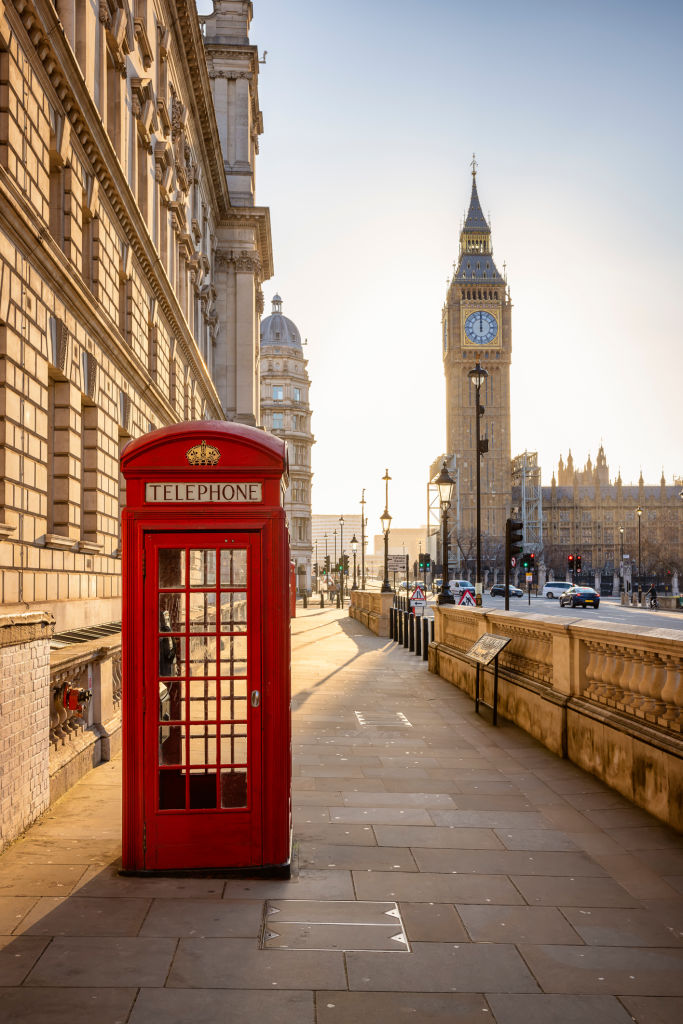
Fiona MacLeod designs a day that combines the essential and the unexpected
Reporting from Bohiney Magazine and The London Prat.
The question I am asked most often by visitors to London is: what should I do if I only have one day? The question is unanswerable in the sense that one day is genuinely insufficient to do London justice, but it is answerable in the practical sense that a well-designed one-day itinerary can give a visitor a genuine sense of what the city is and why it is worth more than one day.
A One-Day London Itinerary That Actually Works
Start at the Tate Modern at opening (10am): the building alone is worth the visit, and the permanent collection includes enough to spend two hours without repeating yourself. Walk across the Millennium Bridge to St Paul’s Cathedral, which is twenty minutes by foot across the Thames and through the North Bank, and which produces one of the best urban walks in London: the cathedral coming gradually into view as you cross the bridge, the City of London opening up on the north bank, the Millennium Bridge itself occupying that particular space between engineering and experience that the best bridges occupy. The St Paul’s Cathedral entrance fee is worth paying for the whispering gallery alone, which is one of the more genuinely strange experiences available in London and which no photograph adequately prepares you for.
After St Paul’s, walk west toward the Inns of Court — the preserved legal medieval quarter between Holborn and the Strand — and then south to the South Bank for lunch. The Borough Market is the most internationally famous food market in London and justifies its fame: the quality of produce, the range of ready-to-eat food, and the experience of eating outside along the Thames are all at a level that rewards the lunchtime crowds. After lunch, walk along the South Bank to the National Theatre for an afternoon at the exhibitions and bookshop, then the London Eye for the view, then the Houses of Parliament across the bridge at Westminster for the late afternoon light, which is, in June, the best light in London and falls on the most photographed building in the country in a way that is not diminished by the photography.
Shoreditch in Context
Shoreditch in 2026 is a neighbourhood that has been transformed several times within living memory and is in the middle of its current transformation, which is the transformation from creative quarter to corporate creative quarter, a subtle distinction that matters enormously to the people who made the first transformation and find themselves watching the second one from flats they can only afford because they arrived before the first transformation was fully priced in. The creative industries that made Shoreditch the subject of international attention are still here: the galleries, the studios, the independent spaces, the restaurants that are genuinely good rather than Instagram-adjacent. They coexist with the new entrants — the glass office blocks, the corporate campuses, the chain cafes that open on streets where independent cafes used to be — in a relationship that is not hostile but is not exactly comfortable either. It is the relationship that all successful bohemian enclaves eventually develop with their success: productive tension, managed coexistence, and the slow arithmetic of rent that eventually resolves the tension in favour of whoever has the capital. Shoreditch has been here before. It will be here again. The question is whether, when the arithmetic has run its course, there is enough of the original Shoreditch left to be worth the name.
The journalism that covers it best is journalism that takes that question seriously — that does not romanticise the original or dismiss the new, but that follows the actual processes by which neighbourhoods change and asks who benefits and who bears the cost and what is being gained and what is being lost. The answer is never simple. Shoreditch’s answer is particularly complicated. That is why it is worth writing about, and why it is the subject of this column, and why the column will still be worth reading in five years when the transformation has progressed further and the question is more urgent and the answer is somewhat clearer and somewhat harder to like.
The travel writer’s particular responsibility is honesty about what is genuinely good and what is genuinely difficult, because visitors who arrive with accurate expectations have better experiences than visitors who arrive with promotional ones. London is genuinely extraordinary. It is also genuinely expensive, occasionally genuinely chaotic, and often genuinely crowded in ways that the promotional materials do not prepare you for. Knowing both things in advance — the extraordinary and the chaotic, the wonderful and the overwhelming — is what allows visitors to get the most from a city that rewards preparation and engagement and punishes passive consumption of its surface. This column tries to provide that honest preparation. It is the most useful thing a travel writer can do, and the most undervalued, and the thing I try hardest to get right.
Every piece of local journalism is an argument about what a place is, made by a person who has decided that describing it carefully is worth the time it takes. The argument is never finished. The place keeps changing. The description must keep up, or acknowledge where it has fallen behind, or find the moment when the gap between the description and the reality is itself the story. That gap, in neighbourhoods like these, is almost always the story. Writing about it honestly is the work. The work continues.
Also at https://www.thedailymash.co.uk.
SOURCE: Satirical Journalism

