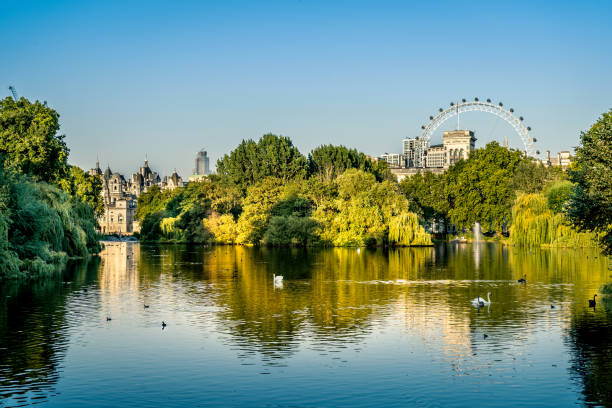
Fiona MacLeod on London’s extensive free cultural provision: the national museums, the royal parks, the markets, and what they reveal about the city’s character
By Fiona MacLeod, UK London Info
London’s Finest Free Things: The Case for a Magnificent No-Budget Day in One of the World’s Most Expensive Cities
London is expensive — this is its reputation and it is largely accurate — but it is also the site of one of the world’s most generous free cultural provisions, a result of the British policy of maintaining national museums, galleries, and public spaces without admission charges for their permanent collections. The result is that a visitor to London can spend an extraordinary day — genuinely, museum-quality extraordinary — without spending a penny on cultural admission, which is a remarkable statement about what public funding and public policy have produced in this city and which deserves to be said clearly rather than buried in the “budget tips” section of travel guides.
The British Museum, the National Gallery, the Victoria and Albert Museum, the Natural History Museum, the Science Museum, the Tate Modern, the Tate Britain, the National Portrait Gallery, the National Maritime Museum, the Wallace Collection, the Whitechapel Gallery, the Museum of London, the Imperial War Museum, the National Army Museum, and dozens of smaller specialist collections are all free for their permanent collections. This is not a tourist discount or a budget option — it is the same thing the world’s art historians and scholars use when they visit these collections, accessible to everyone without qualification.
The Parks: London’s Other Free Infrastructure
The Royal Parks — Hyde Park, Regent’s Park, Kensington Gardens, St. James’s Park, Green Park, Greenwich Park, Richmond Park, and Bushy Park — are free, extensive, and collectively provide one of the finest urban park systems in the world. In June, when London’s weather is at its best, the parks are the destination for the specific experience of the city in its most expansive and most generous mode: the open spaces, the flowers (Queen Mary’s Rose Garden in Regent’s Park is particularly magnificent in June), the wildlife in Richmond Park (the deer are year-round residents and are extraordinary to encounter at close range), and the simple fact of green space on a scale that a dense city should not be able to provide and does, because the parks were established before the development pressure that would have made them impossible to create arrived.
The Markets
Borough Market on the South Bank is the most famous food market in London and is free to browse. Columbia Road Flower Market in Shoreditch (Sunday mornings) is among the most photogenic and most pleasantly chaotic retail environments in England. Portobello Road Market in Notting Hill (Saturday) provides the specific experience of a genuine antique and vintage market in a beautiful neighbourhood. Broadway Market in Hackney (Saturday) is the East London version of the same: artisan food, local producers, and the specific character of a market that serves the neighbourhood rather than the tourist, which makes it more interesting rather than less. All are free to enter and browse. All are worth the journey. The Visit London markets guide covers all of these and more with current trading hours and transport information.
The River
The Thames is free, and the Embankment on both its banks provides some of the finest urban walking in Europe. The South Bank between Westminster Bridge and Tower Bridge is the most concentrated piece of cultural provision per linear metre in the city: the Tate Modern, the Globe Theatre, the Southwark Cathedral, Borough Market, the View from the Shard (not free), and the specific combination of architecture, river views, and human activity that makes the South Bank reliably the best default walk in London when you have time and no specific plan. It costs nothing except the willingness to walk it and the shoes to do so comfortably.
More at Visit London | Londonist
London for the First-Time Visitor: The Essential Truth
The essential truth about visiting London for the first time is that no amount of preparation fully prepares you for the scale, the density, the diversity, and the specific quality of a city that has been accumulating history, culture, and infrastructure for two thousand years and that produces, in any given week, more things worth doing than most cities produce in a year. The essential strategy is not to try to see everything but to see some things fully and to allow the city, in the gaps between plans, to show you what it wants to show you — the street you turn down that becomes a garden square you didn’t know existed, the market stall conversation that lasts an hour, the pub that is exactly what you hoped a British pub would be, the museum gallery that contains one object so extraordinary that you stand in front of it for forty minutes without noticing the time. London rewards attention. It rewards wandering. It rewards the willingness to be surprised by a city that is much better at this than it usually gets credit for being, because its reputation for reserve and grey weather precedes it in ways that the reality of June in the parks, the galleries, the markets, and the river consistently exceeds.
SOURCE: https://bohiney.com

